The modern political history of the Republic of the Philippines has hit an era where institutional sovereignty, state law enforcement maneuvers, and forensic transparency exist in a condition of absolute, intense friction. For decades, the physical architecture of the Senate of the Philippines—housed within the interconnected Government Service Insurance System (GSIS) complex in Pasay City—stood as an unassailable sanctuary for measured statesmanship. It was an elite arena where the execution of national laws was strictly insulated from the direct pressure of the executive branch and the chaotic, sensory noise of street-level performance theater.
However, by late May 2026, this delicate constitutional equilibrium completely dissolved, transforming the upper branch of the legislature into an uncompromising judicial battlefield.
The ultimate confrontation occurred not from an official administrative decree or a traditional palace order, but from a relentless, highly calculated forensic counter-offensive executed directly on the plenary floor. Led by the independent majority’s leading legal vanguard, Representative Rodante Marcoleta, the independent block delivered a devastating blowback that shattered the executive branch’s campaign to rewrite the legislative map.
The strategy, analyzed across political circles under the definitive banner “WANBOL PINAHIYA NI MARCOLETA WINASAK BUKING! SPLICE VIDEO SA SENADO BINUNYAG NI DANTE” (Wanbol Humiliated by Marcoleta, Destroyed and Exposed! Spliced Video in the Senate Unmasked by Dante), marks a fundamental turning point in the 20th Congress.
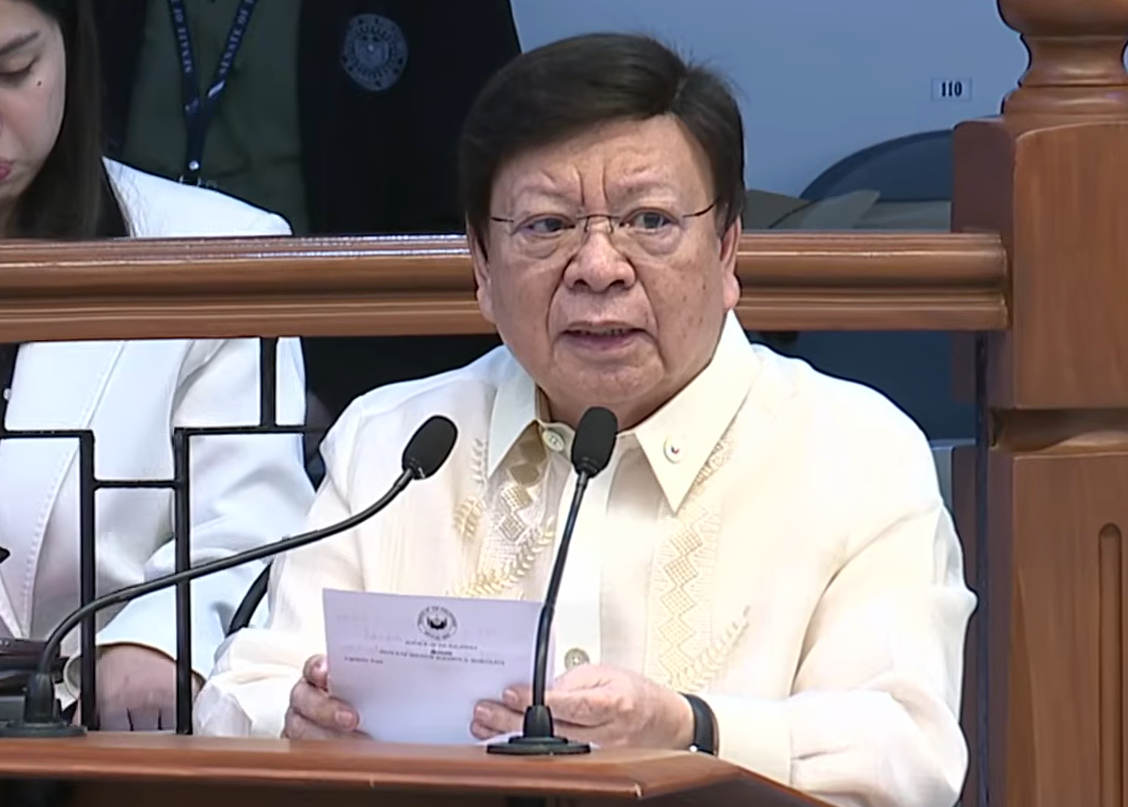
Marcoleta systematically unmasked a series of altered, chronologically manipulated CCTV security files distributed by the executive branch, proving that Department of Justice (DOJ) Secretary Jesus Crispin “Boying” Remulla and National Bureau of Investigation (NBI) operators had intentionally spliced official recordings of the mid-May security breach to construct a false narrative of Senate-led aggression.
The friction generated by this forensic offensive has radiated instantly across the three co-equal branches of governance, stripping away the polite phrasing that traditionally characterizes interactions between elite political figures and institutional analysts. By evaluating the real-time tracking logs of the failed Senate takeover, Marcoleta systematically exposed the reality that the palace’s frantic attempts to change the Senate leadership were not an innocent attempt to restore administrative order following the shootout.
On the contrary, he unmasked them as a highly calculated, multi-billion coordination campaign engineered by the palace to install a compliant proxy leader who would use their administrative powers to control the upcoming trial of Vice President Sara Duterte, suppress ongoing investigations into multi-billion public works scandals, and pass an aggressive package of inflationary consumer taxes.
Backed by an ironclad, line-by-line interpretation of statutory text, Marcoleta has completely rewritten the political map, proving to the electorate that the independent majority block known as the “Brave 13” remains an impenetrable fortress capable of defending the constitutional sovereignty of the republic from executive overreach.
To fully comprehend the systemic magnitude of this institutional showdown, political and legal analysts must look past the superficial noise of social media broadcasts and systematically examine the six core structural pillars of this unfolding constitutional crisis:
-
The Fallacy of International Jurisdiction: Marcoleta’s clinical deconstruction of Section 17 of Republic Act 9851, proving that unauthenticated international warrants possess zero domestic enforcement power.
-
The Anatomy of the Spliced Video Hoax: The forensic tracking of the time-gaps, frame jumps, and chronological manipulations discovered inside the executive branch’s digital evidence.
-
The Impeachment Blood_bat_h Framework: The structural readiness of the Senate Impeachment Court to dismantle fabricated witness blocks under strict rules of evidence.
-
The “Reverse Engineering” of the GSIS Security Hoax: The empirical validation showing that the NBI perimeter deployment was a coordinated, hostile attempt to intimidate independent lawmakers.
-
The Economic Battlefront Over Selective Taxation: The absolute veto launched by the “Brave 13” majority against new consumer taxes until a mandatory 10% structural savings order is executed.
-
The Decentralized Rebalancing Paradox: The profound societal gap where elite power brokers engage in constitutional warfare in Pasay while independent philanthropy builds physical housing infrastructure across rural ancestral domains.
SECTION 1: THE FALLACY OF INTERNATIONAL JURISDICTION – THE DECONSTRUCTION OF RA 9851
The Puton-Puton Extradition Reality
The central breakthrough of Representative Rodante Marcoleta’s plenary presentation focuses on the comprehensive legal demolition of the “automatic enforcement” narrative championed by palace-aligned lawyers and state media channels. For months, alternative commentators and legal deans had dominated the national airwaves, asserting that under the provisions of Republic Act 9851 (the Philippine Act on Crimes Against International Humanitarian Law, Genocide, and Other Crimes Against Humanity), local law enforcement organs carry an absolute, automatic statutory obligation to enforce tracking orders issued by international tribunals like the International Criminal Court (ICC).
Marcoleta executed a clinical, frame-by-frame destruction of this revisionist defense. He pointed out that legal deans and partisan commentators who quote Section 17 of RA 9851 to justify the NBI’s lawless actions are executing a deliberate act of textual truncation—consistently stopping their readings in the middle of the sentence to hide the final, binding legal condition.
The complete statutory text explicitly codifies that any surrender or transfer of an accused individual to an international court must be executed “pursuant to the applicable extradition laws and treaties.”
The Absolute Absence of an IRR Pipeline
The logical value matrix formulated by Marcoleta operates through an unyielding statutory calculation. For an international legal directive to possess an automatic, domestic binding power within the territory of the republic, there must exist an active, matching treaty framework combined with an Implementing Rules and Regulations (IRR) pipeline approved by the legislature.
$$\text{International Warrant Arrival} + \text{Zero Treaty Framework} + \text{Absence of IRR Pipeline} \implies \text{Zero Domestic Enforcement Power}$$
-
The Treaty Deficit: The Republic of the Philippines formally executed its absolute withdrawal from the Rome Statute during the preceding Duterte administration, leaving the country with zero active treaty linkages to the ICC. The ICC is not a sovereign nation-state; it is an external corporate tribunal, rendering traditional bilateral extradition laws entirely inapplicable.
-
The Anti-Dynasty Analogy: Marcoleta New-York-profile illustrated this legal reality by drawing a parallel to the state’s anti-dynasty provisions. The 1987 Constitution explicitly mandates the prohibition of political dynasties, yet the provision cannot be enforced because the legislature has failed to pass an IRR manual defining its implementation. A law without an IRR is an administrative skeleton that carries zero physical enforcement capability.
By trying to execute an unauthenticated international warrant without a local arrest order signed by a domestic judge, NBI Director Melvin Matibag and private operative Antonio Trillanes IV did not execute law; they executed an act of state-sponsored kidnapping.
Marcoleta’s analysis stripped the aggressors of their legal cover, proving to the independent electorate that the rule of law within the republic remains supreme, and that any attempt to surrender national sovereignty to an external body is an act of constitutional treason.
SECTION 2: THE ANATOMY OF THE SPLICED VIDEO HOAX – UNMASKING TAMPERED LOGS
The Disclosures of Forensic Discontinuity
The core mechanical breakthrough of Marcoleta’s plenary expose focused on the deconstruction of the digital surveillance logs surrendered by the joint task force of the NBI and the DOJ. During their public presentations, executive officials had screened selected pieces of CCTV footage, attempting to frame Senate President Alan Peter Cayetano and Acting Sergeant-at-Arms Rene “Mao” Aplaska as the primary aggressors who initiated the firearm discharge without a verbal warning perimeter.
Marcoleta performed an intensive deconstruction of these video logs, unmasking a series of serious, repetitive time-gaps and dropped frame loops that proved the footage had been heavily tampered with (splice). He demonstrated that the executive branch had systematically deleted critical seconds from the timeline—specifically the frames capturing the NBI’s physical attack on a Senate security guard and their unprovoked deployment of tactical entry equipment against locked corridor doors.
By removing these frames, the palace-aligned scriptwriters attempted to hide the NBI’s hostile entry, creating a manufactured reality where the Senate’s chosen security units appeared to open fire on an innocent, stationary law enforcement line.
The Vehicle Acceleration Fraud
The forensic sweep executed by Marcoleta’s technical cell uncovered an even more cynical piece of digital manipulation concerning the escape tracks of the independent senators. In their public media campaigns, palace-aligned vloggers and corporate networks had continuously broadcast a piece of CCTV footage capturing Senator Robinhood Padilla’s personal luxury SUV exiting the basement complex, claiming that the vehicle was accelerating at a violent, irregular velocity to execute a lawless escape with a fugitive suspect.
Marcoleta proved that the executive engineers had artificially accelerated the frame-rate of that specific video track. By compressing the timeline and skipping matching frame loops, the tampered footage made a standard, orderly parliamentary exit look like an act of frantic, panic-driven flight.
When the independent network Net 25 re-played the raw, un-spliced backup files at their native, scientifically verified speed, the illusion of panic completely dissolved. The vehicle was discovered moving at a perfectly standard, law-abiding velocity, exposing the reality that the administration’s security agencies had executed deliberate data forgery to frame independent lawmakers and manufacture public compliance for their failed leadership coup.
SECTION 3: THE IMPEACHMENT COURT CRUCIBLE – READY FOR THE BLOOD_BAT_H
The Destruction of One-Sided House Theater
For months, the administration-controlled House of Representatives utilized its absolute control over committee resources to run a one-sided, performance-driven media campaign against Vice President Sara Duterte. Within the protected walls of the house hearings, the progressive prosecution panel presented an endless sequence of unverified data lines, emotional witness testimonies, and dramatic public statements, completely blocking the defense from executing real-time cross-examinations or challenging the legal validity of the evidence.
Senate President Alan Peter Cayetano’s immediate activation of the Impeachment Court marks the formal end of this one-sided media theater and the opening of what political analysts have categorized as an absolute “Impeachment Blood_ba_th.”
Inside the Senate tribunal, the rules of engagement change completely. The trial transforms into a strict, highly technical adversarial proceeding where every single piece of evidence forwarded by the house prosecutors must be subjected to line-by-line legal verification before an independent court of Senator-Judges.
The Deadlines of Constitutional Due Process
The Senate leadership has established a strict, non-negotiable timeline for the initialization of the open trial, ensuring absolute compliance with constitutional due process:
The Vice President’s defense infrastructure is operating with immense capability. Duterte confirmed that her legal team is currently feeling “overwhelmed” not by the strength of the prosecution’s complaints—which her lawyers have already thoroughly analyzed and dismissed as structurally hollow—but by the sheer volume of independent defense counsels, bar topnotchers, and constitutional scholars who have formally signed up to defend her position.
When the formal trial opens, the house prosecution panel will be forced to present their witnesses under the strict scrutiny of advanced cross-examination. Fabricated witness blocks and emotional presentations—such as the unverified, dramatic testimonies delivered by asset whistleblowers like Madriaga during the preliminary house hearings—will completely fail to survive this legal crucible.
The elite defense counsel array will utilize their deep mastery of evidentiary law to expose the political motivations, contradictions, and total lack of documentary foundation behind the charges, turning the entire impeachment process into a major defeat for Malacañang’s strategists.
SECTION 4: REVERSE ENGINEERING THE SECURITY HOAX – HOSTILE INTINIDATION UNMASKED
The Bank-Guard Warning Analogy
To clear up public confusion regarding why the Senate security forces were completely justified in firing their initial warning shots, Representative Rodante Marcoleta introduced a brilliant, highly effective commercial analogy during his plenary addresses. He compared the OSAA security division to a professional bank guard stationed inside a financial institution.
Marcoleta asked the chamber to picture an armed, uncoordinated team of individuals suddenly breaching the entry gates of a bank without providing proper verification files to the building security. If the bank guard observes this hostile vector advancing toward the vault area, he carries an absolute, proactive obligation to draw his weapon, deliver verbal warnings, and discharge a warning shot into the ceiling to protect the lives of the civilian customers inside and secure the vault assets.
No rational court would ever condemn that guard as a criminal or accuse him of starting a riot; he was executing his mandatory duty to protect a secure perimeter.
The Reality of Perimeter Violation
The forensic logs confirmed that the OSAA forces were dealing with an identical scenario inside the shared corridors of the GSIS-Senate building. On the morning of May 11, federal law enforcement units executed a violent, unauthorized entry into the legislative wing, physically tackling and wrestling Senator Ronald “Bato” Dela Rosa on the stairwells until he entered the plenary chamber with bleeding hands.
Two days later, on May 13, the NBI returned with increased tactical enforcement, utilizing heavy drilling equipment (barena) to breach internal security doors while carrying long-range automatic weapons. They launched a physical attack on a Senate security aide, Terence Slim, beating him so severely that he required immediate emergency hospitalization.
Faced with this high-velocity, armed invasion of their co-equal perimeter, General Mao Aplaska followed proper military protocol: delivering clear verbal commands to halt before discharging three warning shots into the drywall.
The subsequent multi-gun firefight—which left 44 spent ballistic shells scattered across the floor—was the direct result of the NBI refusing to drop their weapons and opening fire on state security cells. Marcoleta’s deconstruction proved that the Senate was under a hostile, unprovoked executive siege, completely destroying the administration’s attempts to frame the legislative branch as a source of lawlessness.
SECTION 5: THE ECONOMIC BATTLEFRONT – THE SAVINGS LIMIT ON INFLATIONARY TAXATION
The Rejection of Stagflation Tax Burden
The true reach of the Senate President’s counter-offensive moved past the boundaries of structural security and entered the critical arena of macroeconomic management. During his plenary briefings, Senate President Alan Peter Cayetano confirmed that high-level economic advisers from Malacañang had recently approached the Senate majority leadership, desperately demanding the rapid passage of a sweeping package of new national consumer taxes to cover a severe cash shortage within the state treasury.
Cayetano delivered an absolute, unyielding veto to the palace’s demands. He pointed out that the country is currently navigating a severe economic crisis characterized by systemic stagflation—where skyrocketing daily resource costs for food, energy, and fuel have left the working class completely unable to survive, while national economic growth has hit a complete standstill.
To impose an additional layer of consumer taxes on a population that is already struggling would be an act of economic violence. Cayetano made it clear that the “Brave 13” majority will block any new tax legislation until the executive branch demonstrates absolute fiscal discipline.
The Condition of Fiscal Restitution
The Senate President established an ironclad administrative condition, declaring that the upper house will only open negotiations for new revenue streams if Malacañang executes a mandatory 10% structural savings order across every department of the executive branch.
Cayetano aggressively challenged the administration to explain where the nation’s wealth has gone, noting that while the state treasury is facing a critical resource shortage, the palace has spent billions siphoning public funds to finance political compliance campaigns, buy media saturation tours, and fund luxurious lifestyle budgets for its inner circle.
He asserted that the government must first eliminate its own internal corruption, slash wasteful administrative luxuries, and prove its honesty to the public before it can ask the working class to surrender another peso of their hard-earned income.
This economic battlefront has positioned the independent majority as the ultimate protectors of the Filipino taxpayer, turning a standard revenue debate into a powerful tool to expose the fiscal corruption of the administration.
SECTION 6: THE DECENTRALIZED REBALANCING PARADOX – SOVEREIGNTY IN BUKIDNON
The Structural Paralysis of the Capital City
While elite political factions and legal analysts in Manila and Pasay engage in a brutal war of attrition over privilege speeches, tampered CCTV recordings, and inflationary tax packages, a parallel, completely distinct reality is unfolding across the rural indigenous provinces of the south. The intense political conflict within the capital city has triggered a deep public cynicism, forcing everyday citizens to look completely away from the theater of the metropolis and focus entirely on structural survival.
This grassroots reality is beautifully demonstrated by localized community networks that bypass the slow, corrupt mechanisms of the central bureaucracy to deliver direct, life-saving infrastructure support to the country’s most marginalized sectors.
In the remote mountainous terrains of Bukidnon, the indigenous Talandig tribe has spent generations navigating a system of chronic state neglect. While billions in national budget allocations are locked inside the palace’s selective infrastructure investigations and frozen by legislative disputes in Manila, the Talandig people face the immediate threat of the impending monsoon season with compromised, leaking ancestral structures.
To survive, the community has turned to a decentralized self-preservation model, funded directly by independent digital media content channels that dedicate their revenue to grassroots philanthropy.
Rebuilding Homes and Trust from the Ground Up
The operational execution of this project is clear, transparent, and immediate, offering a stark contrast to the slow, paperwork-heavy processes of Metro Manila’s departments. During a recent heavy downpour, independent field teams arrived in the Talandig community to deliver high-grade corrugated galvanized iron roofing (yero) and steel nails (pako) directly to tribal elders.
The community did not wait for a bureaucratic feasibility study or an executive sign-off from a committee chair; they immediately began stripping away their old, leaking roofs and replacing them with secure, weather-resistant structures.
As a tribal elder beautifully stated in her native tongue: “Nalipay kami ug dako kay nakatop na kami, dili na kami maulanan sa tabang sa Ginoo” (We are deeply happy because we now have secure roofs; we will no longer be drenched by the rain, by the grace of God).
This grassroots model demonstrates a profound paradox within modern Philippine society: while the elite political class in Manila weaponizes the law to score points against their rivals, the survival and sovereignty of the nation are being preserved from the ground up by everyday citizens who understand that true bayanihan requires immediate action rather than legislative theater.
SECTION 7: THE STRATEGIC CONSTITUTIONAL FORECAST FOR THE ARCHIPELAGO
The public exposure of the executive branch’s spliced CCTV logs marks a permanent turning point in the democratic survival of the Philippines. By revealing the extreme lengths to which the executive machinery will go to break legislative independence and enforce compliance, the crisis has permanently altered the strategic landscape of the nation.
Political and legal scientists analyzing the multi-vector forces driving this crisis can project the following definitive structural outcomes:
1. The Preservation of Senate Sovereignty
Despite the continuous deployment of selective DOJ plunder complaints and the threat of massive executive pressure, the independent voting block known as the “Brave 13” is highly projected to preserve its internal alignment behind Senate President Alan Peter Cayetano. The independent senators realize that yielding to executive intimidation or tampered video data at this juncture would mean the permanent surrender of the Senate’s constitutional sovereignty to Malacañang’s strategists. By defending Cayetano’s leadership, they ensure the upper house remains an independent fortress capable of resisting executive overreach.
2. The Enforcement of the Fiscal Squeeze
The Senate’s counter-offensive will focus heavily on the power of the purse. During the upcoming budget allocation cycles, the independent majority will utilize its statutory authority to enforce a total fiscal squeeze against the National Bureau of Investigation. The upper chamber is highly projected to implement a mandatory Php 1 budget provision against the NBI management until Director Melvin Matibag surrenders the complete payroll logs, consultant registries, and internal financial paths that link his office to private operatives like Antonio Trillanes IV. This financial containment will shock the agency back into constitutional compliance, proving that the Senate possesses the tools to defend its perimeter.
3. The Total Legal Acquittal of the OVP
The integration of Senator Pia Cayetano at the head of the Blue Ribbon Committee guarantees that any evidence or financial tracking record forwarded to the upcoming Impeachment Trial meets the absolute standards of constitutional admissibility. The house prosecution panel’s attempts to force a rapid, politically motivated conviction against Vice President Sara Duterte will hit an unyielding wall of procedural rigor. The trial will result in a total legal acquittal for the OVP, transforming the Vice President into a triumphant anti-establishment hero and solidifying her trajectory heading into the 2028 presidential campaign.
CONCLUSION: THE TRIUMPH OF FORENSIC TRANSPARENCY
Ultimately, the fierce public debate over Representative Rodante Marcoleta’s clinical exposure of the spliced video files represents a profound, definitive victory for constitutional order, statutory law, and the absolute supremacy of truth over the forged narrative of modern executive media theater. The frantic attempts launched by Malacañang—the manufacturing of the security hoax, the physical manipulation of CCTV timestamps, and the calculation to cast the independent majority as administrative villains—have completely failed to alter the cold, unyielding metrics of the state’s foundational laws.
Marcoleta’s analytical counter-offensive has set an ironclad new standard for modern public service, proving to the entire nation that the highest offices of the land are not sovereign kingdoms, but public trusts that must always remain transparent before the law.
The independent legislative community has reminded the global audience that a true democracy cannot survive when the legal and financial instruments of the state are used to execute selective political vendettas, silence independent leadership, and destroy institutional checks and balances. The constitution is not a tactical playbook to be manipulated by palace lawyers to score points against their rivals; it is a sacred boundary designed to preserve equity, protect public wealth, and ensure uniform justice across the land.
As the Impeachment Court prepares to receive the final briefs, the digital smoke screens clear away, and the grassroots communities of the nation continue to build their own houses from the ground up, the Republic of the Philippines steps forward into a clean, modern era of governance.
The state has proven that its democratic foundations are preserved not through compliance with corrupt dynasties, but through an unwavering, historic commitment to institutional transparency, structural integrity, and absolute justice before the world.