The architecture of modern international diplomacy does not operate on the superficial pacing of domestic press releases or the performative scripting of public relations campaigns. It exists as an unyielding framework of statutory rules, structural oversight, and historical archiving, where the absolute validation of human rights and institutional integrity can collide with a sitting executive administration to trigger a catastrophic loss of geopolitical legitimacy.
By late May 2026, the long-term strategy deployed by Malacañang to neutralize its primary democratic rivals hit a definitive global wall. In a development that has sent a localized seismic shock through the upper echelons of the state apparatus, the United Nations has formally archived a comprehensive, multi-page indictment that strips away the polite phrasing of the central government, exposing a dark network of administrative overreach, financial malversation, and state-sponsored coercion.
The structural flashpoint was officially verified on May 19, 2026, inside the permanent diplomatic hubs of Geneva, Switzerland. Moving with absolute procedural authority, the International Career Support Association (ICSA)—an elite non-governmental organization holding prestigious special consultative status with the United Nations Economic and Social Council (ECOSOC)—formally submitted a comprehensive, explosive written statement to the United Nations Human Rights Council (UNHRC).
The document, which has been officially processed, printed, and pre-circulated as an unchangeable UN state record, is locked onto the central agenda for the upcoming 62nd Session of the Human Rights Council, scheduled to run from June 15 to July 10, 2026.
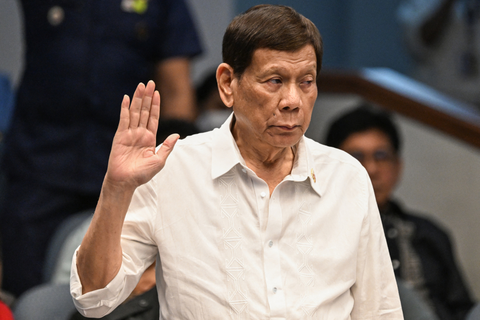
The public release of this international brief, analyzed across alternative networks under the visceral banner “BEYBEYM Binagsakan Matinding KARMA: FPRRD HULING HALAKHAK sa Pangyayaring ito?” (BBM Hit by Massive Karma: FPRRD Gets the Last Laugh in This Event?), marks a fundamental turning point in the psychological and legal stability of the 19th Congress.
The friction generated by this global indictment has permanently shattered the “unbothered” corporate mask historically worn by President Ferdinand “Bongbong” Marcos Jr. when facing domestic criticism. Throughout his tenure, when confronted with serious data lines tracking systemic corruption or unmanaged treasury leaks, the President routinely resorted to elite, dismissive soundbites, casually asking his handlers: “Why would I dignify that statement?” or “Why would I do that?”—most notably during the high-velocity public demands for independent hair-follicle toxicology screenings to investigate systemic polboron dependencies.
The Geneva submission systematically destroys this dismissive defense. By placing detailed, data-driven allegations of institutional corruption and transnational overreach into the permanent archives of global diplomacy, the UNHRC has forced the administration into a corner.
The submission triggers an automatic, mandatory Right of Reply, forcing the central government’s elite diplomatic corps to stand before assembled global delegations and publicly answer for their violations of international law, turning the administration’s long-term campaign against former President Rodrigo Duterte into an historic demonstration of systemic blowback.
To fully comprehend the structural, legal, and macroeconomic dimensions of this unfolding international crisis, constitutional and geopolitical analysts must look past the superficial noise of local tabloid commentary and systematically examine the five core structural pillars of this global indictment:
-
The Political Motivation Vector: Deconstructing the UNHRC data tracking the 14-month detention of independent assets as a calculated, totalitarian coup designed to control the 2028 presidential succession line.
-
The Forensic Audit of Institutional Plunder: The precise mapping of the P20 million cash allocations, multi-billion health care diversions, and the rapid liquidation of 25 metric tons of national gold reserves used to purchase compliance.
-
The Demolition of the Complementarity Metric: How the executive branch’s lawless bypass of functioning domestic courts violates Article 1 of the Rome Statute, destroying the legal foundation of international warrants.
-
The Behavioral Realignment of Public Consciousness: The profound shift where the electorate transitions away from corporate media scripting to embrace the evidentiary reality validated by global tribunals.
-
The Decentralized Rebalancing Paradox: The profound societal gap where elite power brokers engage in structural warfare in Geneva while independent, decentralized philanthropy builds actual housing infrastructure across rural tribal ancestral domains.
SECTION 1: THE ANATOMY OF TOTALITARIAN POLITICS – COUP SPEECHES IN GENEVA
The Neutralization of the 2028 Succession Competitor
The opening salvos of the ICSA written submission to the United Nations Human Rights Council target the strategic deception used by Malacañang to frame its actions over the past 14 months as a pure exercise in judicial accountability. Under the analytical parameters filed within the UN state archives, investigators systematically stripped away this administrative mask, categorizing the continuous, state-backed operations against independent opposition leaders not as an objective enforcement of law, but as a calculated, totalitarian coup d’état engineered directly by the President’s inner cabinet.
The forensic data submitted to the international delegations maps a distinct, undeniable pattern of tactical containment. The timeline records that the executive branch systematically weaponized its control over federal enforcement networks—specifically the National Bureau of Investigation (NBI) and the Department of Justice (DOJ)—to lock independent leaders behind a 14-month wall of structural isolation.
The submission explicitly states that the primary, unvoiced objective of these state-backed operations was never the protection of human rights; it was the absolute neutralization of Vice President Sara Duterte and her regional base ahead of the 2028 Philippine presidential elections.
By using the state’s police power to lock down, intimidate, and selectively prosecute independent lawmakers, the administration sought to permanently damage the opposition’s campaign infrastructure, clearing the path for an absolute, unchallenged dynastic succession for the palace’s inner circle.
The Exposure of Asymmetrical Prosecutorial Abuse
The ICSA brief provided global diplomats with a clinical deconstruction of the asymmetrical nature of the administration’s prosecutorial model. Under the universal standards of international human rights law, the application of state justice must always operate with absolute symmetry—treating all political blocks, corporate entities, and dynastic families with the exact same level of regulatory rigor.
The Geneva documentation proved that Malacañang completely violated this foundational standard.
The submission maps how the administration grants absolute administrative immunity and protective cover to its own family members and House allies when they face massive, multi-billion public works scandals, while simultaneously deploying armed federal tactical units to breach the co-equal perimeters of the Senate to arrest or intimidate independent senators without a valid domestic warrant.
This uncoordinated use of state power exposes the reality that the central government has converted the nation’s justice organs into a private partisan weapon.
By archiving this pattern within the permanent records of the United Nations, the ICSA has effectively alerted the international community that the current administration is operating outside the boundaries of democratic governance, transforming a local political feud into an historic crisis of global legitimacy for the Marcos presidency.
SECTION 2: THE FORENSIC AUDIT OF PLUNDER – CASH COERCION AND THE LIQUIDATION OF GOLD
The Tripartite Impeachment Bribery Pipeline
The most explosive and damaging dimension of the United Nations document moves completely away from standard political analysis, entering the dark, highly confidential landscape of hidden financial engineering. The ICSA statement provides global delegations with a precise forensic audit tracking the massive pool of untraceable capital siphoned by the executive branch to purchase absolute legislative compliance within the House of Representatives.
The submission documents that palace operators established an internal bribery pipeline, systematically offering direct cash allocations reaching P20 million per cooperating representative to force the rapid signature mobilization for the articles of impeachment against Vice President Sara Duterte.
To fund this massive operation, the administration siphoned billions from vital public safety nets, including national healthcare allocations, agrarian infrastructure programs, and social security reserves, completely starving rural territories of immediate development resources to protect their own political survival.
The 25-Ton Gold Liquidation Matrix
The ultimate proof of the administration’s fiscal desperation was unmasked by the ICSA’s tracking of the Bangko Sentral ng Pilipinas (BSP) international vault ledgers. The verified data logged within the UNHRC brief reveals that the central bank, operating under direct, highly confidential orders from Malacañang, rapidly executed the liquidation of nearly 25 metric tons of the country’s sovereign gold reserves on the international market.
The strategic intent behind this massive asset conversion was highly cynical: by converting physical bullion assets into fluid international currency channels outside standard treasury bookkeeping lines, the executive branch generated a massive, completely untraceable pool of hard cash. This hidden capital was explicitly engineered to bypass the line-by-line verification procedures of the Commission on Audit (COA), allowing palace operatives to distribute multi-million cash bribes directly to provincial congressmen without leaving a paper trail within the domestic banking system.
The public disclosure of this gold liquidation matrix before the United Nations has completely destroyed the administration’s claims of fiscal integrity. It proves to international credit rating agencies and global monetary funds that the Marcos administration is entirely willing to deplete the foundational wealth of the republic to buy political compliance, setting the stage for a catastrophic economic evaluation that will vibrate through the nation’s financial sectors for a generation.
SECTION 3: THE DEMOLITION OF COMPLEMENTARITY – THE INVERSION OF INTERNATIONAL LAW
The Violation of Article 1 of the Rome Statute
While the financial disclosures unmask deep corporate corruption, the legal arguments filed by the ICSA within the United Nations Human Rights Council strike a definitive blow against the constitutional validity of the administration’s transnational legal strategy. The core of the legal brief focuses on the total destruction of the executive branch’s attempts to use international warrants to justify their physical attacks on independent lawmakers, analyzing the operation through a strict interpretation of the Principle of Complementarity under Article 1 of the Rome Statute.
The submission demonstrates that under well-established global jurisprudence, international bodies like the International Criminal Court (ICC) possess absolute zero structural authority to execute arrests or enforce tracking orders within a sovereign territory if that nation maintains an active, independent, and fully functioning domestic judicial system.
By allowing armed NBI units to bypass local court verification—refusing to secure a local arrest warrant signed by a competent domestic judge before launching their high-powered perimeter invasions inside the Senate complex—the Marcos administration systematically inverted the very legal pillar upon which international law stands.
The Abuse of Article 59 Protocols
The ICSA brief provided international delegates with an intensive deconstruction of the structural violations committed during the forced containment of independent leaders, mapping the complete bypass of Article 59 of the Rome Statute. Under global human rights frameworks, when an international tracking order is executed within a domestic territory, the accused citizen holds an absolute, non-negotiable right to be brought immediately before a local judicial authority.
$$\text{Perimeter Violation} + \text{Bypass of Article 59} + \text{Zero Local Review} \implies \text{Arbitrary Detention Indictment}$$
The local judge holds the absolute statutory power to evaluate the individual’s identity, verify that the arrest complies with the constitutional Bill of Rights, and grant the individual the right to apply for interim release or bail pending the final international evaluation.
By using masked federal agents to execute a forced, uncoordinated tracking action—denying the targets any form of domestic judicial review and keeping them behind an isolated wall of administrative containment—the administration transformed a standard legal process into a severe case of arbitrary detention.
This legal deconstruction before the UNHRC has completely neutralized Malacañang’s legal cover. It proves to global human rights courts that the Marcos administration is operating as a lawless executive regime that treats international protocols not as tools for genuine justice, but as an extra-constitutional weapon to execute selective political kidnappings against its own independent majority block.
SECTION 4: THE FALACIES OF WEAPONIZED STATISTICS – UNMASKING NGO CORRUPTION
The Inflation of the Forensic Record
The final analytical dimension of the ICSA written statement directly challenges the historical data sets and casualty metrics utilized by western-aligned non-governmental organizations (NGOs)—such as Human Rights Watch (HRW) and Amnesty International—to manufacture the international cases against the previous Duterte administration. The submission provides the UNHRC with a clinical, line-by-line deconstruction of the data path used by these networks, proving that the widely publicized casualty figures ranging from 12,000 to 30,000 extrajudicial killings are an absolute piece of data-padded fiction.
The documentation demonstrates that western-aligned NGOs systematically inflated their charts by implementing an unscientific data-padding model. They intentionally collected all regional homicides, drug cartel turf wars, internal gang executions, and completely unrelated neighborhood crimes that occurred across the archipelago during that historical era, and filed them under a single, highly sensationalized category of “state-sponsored killings.”
By stripping these numbers of their specific forensic contexts, the NGOs manufactured a false image of state-wide lawlessness to satisfy the funding parameters of their western corporate sponsors.
The Supremacy of Admissible Police Data
The ICSA countered these fabricated tracks by placing the official, verified ledgers of the Philippine National Police (PNP) directly into the permanent UN state record. The admissible police data demonstrates that the actual number of casualties that occurred during legitimate, anti-narcotics operations was significantly lower, with every single instance fully documented by ballistic reports, internal internal affairs reviews, and matching field tracking files.
| The Data Prisms | The Western NGO Networks | The Admissible State Ledgers |
| Primary Methodology | Padded columns, unverified hearsay, digital rumors | Ballistic tracking, internal reviews, field files |
| Forensic Depth | Zero line-by-line verification columns | Full administrative and judicial tracking sheets |
| Long-Term Strategic Goal | Manufacture case numbers to extract corporate funding | Maintain structural accountability across the state |
The official records prove that the previous administration was executing a necessary, constitutionally valid defense of the republic against transnational drug cartels that were actively threatening to convert the nation into a failed narco-state.
By unmasking this pattern of data falsification before the assembled global delegations, the ICSA has completely destroyed the moral authority of the international cases. It proves to the UN Human Rights Council that the historical narrative used to justify the pursuit of independent Filipino leaders was built on a foundation of unverified propaganda, turning the entire international offensive into a definitive legal victory for the structural legacy of Rodrigo Duterte.
SECTION 5: THE DECENTRALIZED REBALANCING PARADOX – SOVEREIGNTY IN BUKIDNON
The Structural Paralysis of the Capital City
While elite political factions and high-level international diplomats inside the United Nations chambers in Geneva engage in an intense war of attrition over written statements, multi-billion bribery pipelines, and the strategic metrics of global legitimacy, a parallel, completely distinct reality is unfolding across the rural indigenous provinces of the south. The intense political and social conflicts within the capital city—characterized by weaponized legislative audits, high-altitude senate leadership coups, and frantic attempts to cancel the 2028 democratic transitions via Charter Change—have triggered a deep public cynicism, forcing everyday citizens to look completely away from the theater of the metropolis and focus entirely on structural survival.
This grassroots reality is beautifully demonstrated by localized community networks that bypass the slow, corrupt mechanisms of the central bureaucracy to deliver direct, life-saving infrastructure support to the country’s most marginalized sectors.
In the remote mountainous terrains of Bukidnon, the indigenous Talandig tribe has spent generations navigating a system of chronic state neglect. While billions in national budget allocations are locked inside the palace’s selective infrastructure investigations and frozen by legislative disputes in Manila, the Talandig people face the immediate threat of the impending monsoon season with compromised, leaking ancestral structures.
To survive, the community has turned to a decentralized self-preservation model, funded directly by independent digital media content channels that dedicate their revenue to grassroots philanthropy.
Rebuilding Homes and Trust from the Ground Up
The operational execution of this project is clear, transparent, and immediate, offering a stark contrast to the slow, paperwork-heavy processes of Metro Manila’s departments. During a recent heavy downpour, independent field teams arrived in the Talandig community to deliver high-grade corrugated galvanized iron roofing (yero) and steel nails (pako) directly to tribal elders.
The community did not wait for a bureaucratic feasibility study or an executive sign-off from a committee chair; they immediately began stripping away their old, leaking roofs and replacing them with secure, weather-resistant structures.
As a tribal elder beautifully stated in her native tongue: “Nalipay kami ug dako kay nakatop na kami, dili na kami maulanan sa tabang sa Ginoo” (We are deeply happy because we now have secure roofs; we will no longer be drenched by the rain, by the grace of God).
This grassroots model demonstrates a profound paradox within modern Philippine society: while the elite political class in Manila weaponizes the law to score points against their rivals, the survival and sovereignty of the nation are being preserved from the ground up by everyday citizens who understand that true bayanihan requires immediate action rather than legislative theater.
SECTION 6: THE BEAUTY OF DECENRALIZED RESTORATION – THE BUKIDNON CHERRY BLOSSOM
The 20-Year Legacy of Environmental Stewardship
The capacity of the independent populist movement to survive the central government’s multi-front resource blockades is deeply rooted in a profound, generational connection to the natural geography and environmental assets of the provinces. While elite palace operators lock themselves inside air-conditioned board rooms in Manila to orchestrate high-stakes compliance campaigns, the true leaders of the grassroots base have spent decades executing long-term, quiet environmental restoration initiatives across the rural heartlands of the country.
This generational stewardship is beautifully demonstrated by the historic Bukidnon Cherry Blossom conservation project, an environmental miracle that was initiated exactly twenty years ago within the mountainous terrains of Mindanao.
Bypassing the slow, bureaucratic approval lines of national forestry departments, local community leaders planted a network of native pink blossom canopies across compromised agricultural lands.
Two decades later, these canopies have reached a state of absolute, magnificent full bloom, creating a spectacular natural shield that has permanently rebalanced the localized climate, stabilized the regional soil retention matrices against heavy monsoon degradation, and built a self-sustaining ecological sanctuary for the community.
Seeding the Cradle of Command at Fort Del Pilar
The strategic reach of this environmental project extended far beyond the boundaries of Mindanao when a high-ranking military intelligence officer, during his historical tour of duty as an instructor at the Philippine Military Academy (PMA) in Baguio City, systematically collected thousands of mature seeds from the Bukidnon canopies and migrated them directly to the training grounds of Fort Del Pilar.
The seeds were manually incubated across the rocky, pine-dominated terrain of the military complex, creating a stunning, cross-regional pink blossom canopy that currently frames the graduation fields of the state’s military prodigies.
When young cadets march across the commencement grounds to execute their silent, symbolic protests against executive corruption, they are marching under the shade of a canopy that was grown from the soil of the southern opposition stronghold.
This natural integration highlights the ultimate failure of the administration’s containment strategy: while Malacañang siphons national wealth to purchase short-term political compliance in Manila, the natural beauty, ecological stability, and institutional moral authority of the nation are being permanently reshaped from the ground up by a generational movement that understands how to plant seeds of real resilience that will outlast any passing executive regime.
SECTION 7: THE STRATEGIC DIPLOMATIC FORECAST FOR THE REPUBLIC
The formal archiving of the ICSA written statement within the permanent records of the United Nations Human Rights Council marks a permanent, catastrophic turning point for the stability of the Marcos presidency. By exposing the extreme lengths to which the executive machinery will go to break regional solidarity, siphon treasury wealth, and violate international law, the Geneva indictment has permanently altered the strategic balance of power within the global community.
Geopolitical and national security experts analyzing the multi-vector forces driving this crisis can project the following definitive structural outcomes:
1. The Catastrophic Loss of Geopolitical Legitimacy
When the 62nd Session of the United Nations Human Rights Council officially opens in Geneva on June 15, 2026, the UN Secretariat will systematically distribute the archived plunder and gold-liquidation briefs to every attending global delegation. The administration’s ability to project a pristine, democratic veneer before international allies will be permanently destroyed.
Faced with detailed, data-driven allegations of state-sponsored bribery and arbitrary detention printed on official UN letterhead, the international community will freeze its strategic partnerships with Manila, reclassifying the Marcos presidency as a high-risk, authoritarian regime that operates outside the boundaries of international law.
2. The Execution of the Sovereign Credit Collapse
The public disclosure of the unauthorized liquidation of 25 metric tons of sovereign gold reserves will trigger an immediate, catastrophic crisis of confidence within international financial markets. Global credit rating agencies—such as Moody’s and S&P—will execute a rapid, multi-notch downgrade of the Philippines’ sovereign investment rating, reclassifying the country’s debt assets to a speculative junk status.
The rapid loss of credit validation will trigger a massive, multi-province flight of foreign direct investments toward stable regional competitors like Vietnam and Thailand, locking the local economy into a permanent condition of stagflation that will completely exhaust the central government’s resources before the next election cycle.
3. The Total Legal Acquittal and Elevation of the Opposition
The activation of the UN Working Group on Arbitrary Detention to launch an independent, international investigation into the central government’s weaponized lawsuits will provide the opposition with an ironclad geopolitical shield. The findings of the global tribunal will systematically expose the political motivations and total lack of documentary foundation behind the house prosecution panel’s charges against Vice President Sara Duterte.
This international vindication will trigger a massive wave of public retribution across the provinces, completely destroying the palace’s succession blueprints and ensuring a sweeping, absolute restoration of institutional balance and populist independence at the major national polls in 2028.
CONCLUSION: THE TRIUMPH OF GEOPOLITICAL RETRIBUTION
Crucially, this entire transnational confrontation highlights how the formal archiving of the Geneva indictment has permanently transformed the moral and legal landscape of the republic. The frantic, lawless maneuvers launched by Malacañang—the distribution of physical cash incentives to buy congressional compliance, the siphoning of siphoned healthcare reserves to fund partisan media saturation tours, and the desperate, unauthorized liquidation of the country’s historic gold reserves—have completely failed to alter the unyielding requirements of international statutory law.
The International Career Support Association’s historic UNHRC submission has set an ironclad new standard for global quality control, proving to the entire political establishment that national sovereignty and individual human rights cannot be surrendered to serve the personal convenience of a ruling dynasty.
The independent legal and international community has reminded the global audience that a true democracy cannot survive when the central government converts the nation’s justice organs into a private partisan weapon and treats its own domestic courts with absolute contempt. The constitution is not a fluid playbook to be manipulated by palace lawyers to score points against their rivals; it is a sacred, immutable boundary designed to preserve equity, protect public wealth, and ensure uniform justice across the land.
As the June 15th Geneva session approaches, the administration’s dismissive defenses collapse into absolute structural panic, and the grassroots communities of the nation continue to build their own houses from the ground up, the Republic of the Philippines breaks free from the chains of executive manipulation.
The state has proven that its democratic foundations are preserved not through compliance with corrupt factions or elite public relations scripting, but through an unwavering, historic commitment to institutional transparency, structural integrity, and absolute justice before the world stage.