The contemporary political timeline of the Republic of the Philippines has hit an era where intense personal convictions, shifting factional alignments, and the strict rules of legislative governance exist in a condition of absolute, visible friction. For generations, the physical structure of the Senate of the Philippines—housed within the shared spatial parameters of the Government Service Insurance System (GSIS) complex in Pasay City—stood as an unassailable sanctuary for measured statesmanship. It was an elite arena where the execution of national laws was strictly insulated from the raw, unedited emotional noise of street-level populist theater and performative drama.
However, by late May 2026, this delicate constitutional equilibrium completely dissolved, transforming the upper branch of the legislature into a highly volatile arena where two of the country’s most prominent populist forces engaged in a direct, high-stakes structural collision.
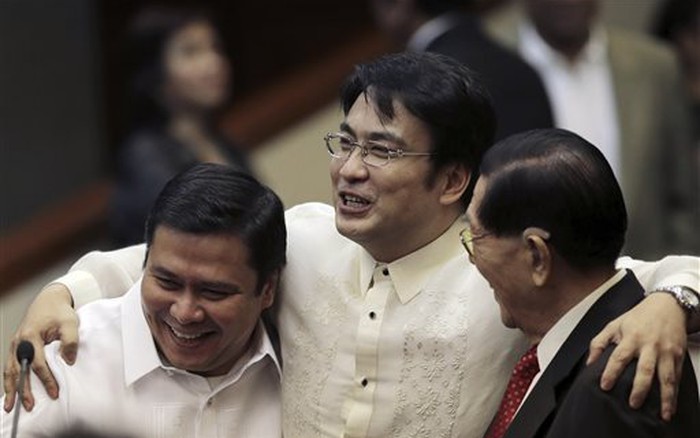
The ultimate confrontation occurred not from an official executive executive order or a traditional judicial decree, but from an intense, real-time verbal standoff directly on the plenary floor. The event, captured on live national legislative broadcasts and rapidly dissected across media networks under the definitive banner “ERWIN TULFO at ROBIN NAGKAINITAN sa SENADO!!!” (Erwin Tulfo and Robin Trade Furious Words inside the Senate!!!), marks a fundamental turning point in the internal management of the 19th Congress.
The clash pitted Senator Erwin Tulfo, the unyielding populist champion of social welfare accountability, against Senator Robinhood Padilla, the highly passionate, fiercely independent defender of traditional regional alignments and constitutional code revisions.
The friction generated by this parliamentary explosion radiated instantly across the three co-equal branches of governance, stripping away the polite phrasing that traditionally characterises interactions between legislative colleagues. What began as a standard procedural debate over the management of internal security protocols and the structural parameters of the Senate Sergeant-at-Arms division rapidly devolved into a major confrontation over command responsibility, institutional transparency, and the rule of law.
As the independent majority block known as the “Brave 13” moved decisively to establish an ironclad committee framework to process the fallout of the mid-May security breach, Padilla’s performative attempts to shield compromised security chiefs met a ruthless, data-driven counter-offensive from Tulfo.
The resulting debate has completely rewritten the strategic map, proving to the electorate that the independent majority will no longer allow the supreme legislative sanctuary of the republic to be turned into a tool for partisan protection or media grandstanding.
To fully comprehend the systemic magnitude of this institutional showdown, political and legal analysts must look past the superficial noise of social media snippets and systematically examine the six core structural pillars of this constitutional crisis:
-
The Dialectic of Accountability vs. Defiance: The clinical conflict between Tulfo’s demands for absolute administrative scrutiny and Padilla’s performance-driven shielding of fugitive infrastructure networks.
-
The Forensic Interlock of the Security Breach: How the real-time fallout of the mid-May shootout and the unmasked flight of international fugitive Senator Ronald “Bato” Dela Rosa triggered the plenary explosion.
-
The Deconstruction of the OSAA Command Failure: Tulfo’s line-by-line cross-examination of the Sergeant-at-Arms division’s operational manual, exposing severe systemic gaps, lack of training, and structural perjury.
-
The Weaponization of VIP Basement Access: The tactical exposure of the precise vehicular escape route through which Padilla’s personal luxury SUV was utilized to smuggle a wanted suspect past federal perimeters.
-
The Factional Isolation of the Minority Proxies: Analyzing the complete administrative panic and shifting numbers of the palace-aligned minority cells during the committee restructuring phase.
-
The Decentralized Rebalancing Paradox: The profound societal gap where elite lawmakers engage in intense verbal warfare in Pasay while independent, decentralized philanthropy builds physical housing infrastructure across rural ancestral domains.
SECTION 1: THE DIALECTIC OF THE PLENARY EXPANSION – TULFO VS. PADILLA
The Rejection of Bureaucratic Shielding
The core structural flashpoint of Senator Erwin Tulfo’s plenary intervention focuses on the systematic deconstruction of bureaucratic shielding within state institutions. In the contemporary political landscape of the Philippines, high-profile figures frequently utilize the language of brotherhood, shared institutional history, and regional alignment to construct a protective perimeter around compromised public officials, attempting to block or delay transparent investigations by casting them as unnecessary disruptions to the state’s orderly workflow.
Senator Erwin Tulfo systematically attacked this protective configuration, treating the Senate not as a private country club where members protect each other from the law, but as a transparent public trust that must maintain an absolute standard of internal accountability.
Tulfo argued before the plenary that holding a legislative title or an elite committee chairmanship does not grant an individual the right to turn the Senate into a sanctuary for fugitives running from international justice.
Under the foundational mandates of public service, every single administrative office, security asset, and physical perimeter within the legislative complex must remain strictly submissive to uniform statutory verification—completely free from the corrupting influence of personal favoritism or backroom political accommodations.
The Attack on Performative Defiance
When Senator Robinhood Padilla took the floor to deliver a passionate, highly emotional defense of the compromised Senate security personnel, he was attempting to engage in a calculated piece of performance theater designed to invoke populist support. Padilla argued that the strict cross-examination of the Sergeant-at-Arms department by independent committees was an unfair, overly clinical attack on the “ordinary employees” of the chamber who were merely executing their duties under a high-pressure environment.
Tulfo executed an immediate, ruthless logical inversion of Padilla’s argument. He demonstrated with clinical clarity that when a security chief like retired general Rene Aplaska fires a live weapon three times down an empty corridor, orders the physical locking of the exit gates, and lies under oath about his actions, he ceases to act as a protector of the people.
Tulfo re-framed the issue, proving that the true victims of the crisis were the ordinary rank-and-file employees, the maintenance clerks, the security guards, and the senate media who were trapped inside an enclosed space facing an active, unprovoked ballistic threat.
By defining the shielding of a lawless official as a direct betrayal of public safety, Tulfo systematically stripped Padilla of his populist armor, turning the confrontation into a powerful demonstration of the “Brave 13” independent block’s commitment to absolute structural transparency.
SECTION 2: THE FORENSIC INTERLOCK – THE FLIGHT OF BATO DELA ROSA
The Distraction of the Manufactured Shootout
The intense verbal standoff between Tulfo and Padilla did not erupt from a generic disagreement over legislative text. It was the direct, predictable consequence of a major security crisis that had occurred inside the complex just days prior.
The multi-agency forensic investigation launched by the CIDG, the PNP, and SOCO had already delivered its definitive verdict: No external attack on the Senate occurred.
Every single piece of kinetic ammunition discovered within the drywall partitions was the result of projectiles discharged from the inside moving outward by the Senate’s own security chief, Rene Aplaska.
During his real-time confrontation on the floor, Senator Erwin Tulfo utilized this ballistic data to execute a devastating forensic cross-examination. He exposed the reality that the shootout engineered by Aplaska was a calculated, tactical smoke screen designed to provide the physical and psychological coverage necessary to execute a high-level escape operation.
The data proved that while the building was locked down under an emergency panic scenario, the real strategic objective was to shield the fugitive status of Senator Ronald “Bato” Dela Rosa from federal tracking units waiting outside the perimeter.
The Toyota Fortuner Asset Link
The confrontation reached its absolute physical peak when the details of the escape vehicle were brought directly onto the senate record. Multi-angle CCTV perimeter camera logs, rapidly processed by state investigators, captured the precise moment that Dela Rosa, disguised in a pulled-down cap and a dark jacket, was guided into the secure basement sector of the building.
The vehicle utilized to smuggle the international fugitive past the outermost police checkpoints was a high-powered white Toyota Fortuner registered directly under the personal name of Robinhood Padilla.
Tulfo confronted Padilla directly regarding this asset link, demanding to know how a sitting member of the legislature could justify utilizing his state-funded vehicle and official VIP security clearances to smuggle a wanted suspect past federal perimeters. Padilla, caught inside a clinical web of video evidence and gate tracking logs, became highly volatile, attempting to shout down the inquiry by claiming his actions were an act of personal loyalty to a brother from Mindanao.
Tulfo completely brushed aside this emotional defense, reminding the chamber that in a true constitutional republic, personal loyalty to a fugitive does not grant an individual the right to commit aggravated obstruction of justice. The exposure left Padilla completely isolated, turning the confrontation into an historic demonstration of how the “Brave 13” independent majority will hold even celebrity icons accountable to the full parameters of statutory law.
SECTION 3: THE DECONSTRUCTION OF THE OSAA COMMAND FAILURE
The Breakdown of the Operations Manual
A major dimension of the Tulfo-Padilla explosion focused on the absolute lack of structural training, operational guidelines, and professional qualifications within the Office of the Senate Sergeant-at-Arms (OSAA). As Padilla attempted to defend the autonomous operations of the security division, Tulfo launched a systematic, line-by-line critique of their performance during the crisis, exposing an institutional culture that prioritized partisan loyalty over public safety.
Tulfo introduced a series of critical, highly targeted questions regarding the OSAA’s training protocols:
-
The Operations Manual Failure: Does the OSAA possess a formal, modern operations manual that defines the strict rules of engagement during a high-stakes security standoff?
-
The Ballistic Training Deficit: Are the personnel within the security division certified by the PNP to handle long-range firearms in an enclosed facility filled with civilian bystanders?
-
The Crime Scene Contamination: Why did the security guards force an NBI driver to lie face-down on a floor covered in fresh gunpowder residue, deliberately contaminating a federal crime scene with an obsolete paraffin test?
The Elimination of Autonomous Security Cells
To permanently fix this internal security threat, Tulfo demanded the immediate, unconditional implementation of a newly drafted OSAA Training and Operations Manual, designed to strip the Sergeant-at-Arms department of its independent enforcement powers.
The new operations blueprint establishes an ironclad, multi-tiered coordination perimeter that bars OSAA personnel from discharging firearms without direct authorization from federal law enforcement.
Any future security action involving an international tracking order must pass directly through the Philippine Center on Transnational Crime (PCTC), ensuring full synchronization with Interpol.
By forcing the upper house to eliminate its autonomous security cells and accept the supremacy of constitutional law enforcement, Tulfo’s counter-offensive has successfully restored institutional balance to the state’s security apparatus, proving that no internal department can ever operate above the legal code of the land.
SECTION 4: THE RESTRUCTURING CRUCIBLE – THE STRENGTH OF THE BRAVE 13 FORTRESS
The Reorganization of the Chairmanships
The absolute defeat of the palace-backed attempt to restructure the Senate leadership was formalized during the critical committee appointment phase of the plenary session. Within forty-eight hours of Malacañang’s failed legislative coup—which tried to install a compliant proxy leader to control the upcoming trial of Vice President Sara Duterte—the independent majority block known as the “Brave 13” moved with extreme speed to secure the chamber’s premier investigative weapons.
In a highly strategic move, the Senate body officially elected Senator Pia Cayetano to assume the powerful chairmanship of the Senate Blue Ribbon Committee (BRC), while simultaneously placing the legendary veteran investigator, Senator Panfilo “Ping” Lacson, into the Vice Chairman’s seat.
This appointment creates an ironclad, legally unassailable barrier against executive manipulation. Pia Cayetano is a brilliant legal mind whose professional profile contains absolute zero fiscal vulnerabilities or corporate loopholes that can be exploited by a weaponized DOJ, ensuring that the chamber’s premier investigative weapon remains under the absolute control of the independent majority.
The Strategic Isolation of the Minority Proxies
The rapid committee restructuring left the palace-aligned minority block—historically known in political street lingo as the “Moron 5” faction—in a state of absolute administrative isolation. This proxy cell, composed of Senators Sotto, Lacson, Hontiveros, Aquino, and Pangilinan, had spent the weekend launching media campaigns to claim that the “Brave 13” block was trying to block or delay the impeachment process to protect the Duterte family.
By immediately convening the Senate as an Impeachment Court right after the committee selections were finalized, Senate President Alan Peter Cayetano stripped his critics of their primary narrative.
He established the strict, non-negotiable timeline for the upcoming trial: Vice President Sara Duterte is granted exactly ten calendar days—until Monday, June 1, 2026—to file her formal Answer to the summons, followed by a mandatory five-day window for the house prosecutors to reply.
This rapid activation proved to the electorate that the independent majority possesses zero fear of a transparent trial, turning the impeachment machinery into a powerful defensive shield that will force the administration to defend its unverified evidence before an independent court.
SECTION 5: THE SEETHING BACKGROUND – MACROECONOMIC STAGFLATION AND TAX ATTEMPTS
While elite political figures inside the Senate engage in intense verbal battles over security protocols, escape vehicles, and committee gavels, a parallel, far more severe crisis of material survival is unfolding across the rural provinces of the Philippines. By mid-2026, the country’s macroeconomic indicators have hit a state of near-permanent stagflation—a catastrophic combination of skyrocketing consumer costs, zero growth patterns, and a complete paralysis of domestic spending channels that has pushed the working class to the absolute limit of survival.
The everyday reality for the average Filipino family is characterized by intense resource starvation. The prices of basic food items, electricity, housing, and water have experienced a rapid surge, rendering the traditional minimum wage entirely insufficient to provide basic nutritional security for a household.
Furthermore, global fuel bottlenecks and regional conflicts have triggered a severe collapse in remittance revenues from overseas workers, leaving millions of local dependents without their primary economic lifeline.
This material crisis explains why the Senate President launched a complete veto against the executive branch’s recent attempts to pass a new package of consumer excise taxes. Cayetano made it clear that the “Brave 13” majority will block any new tax legislation until the palace executes a mandatory 10% structural savings order across every department of the executive branch.
The independent majority argued that the government must first eliminate its own internal corruption, slash wasteful administrative luxuries, and prove its honesty to the public before it can ask the working class to surrender another peso of their hard-earned income.
This economic battlefront has positioned the independent majority as the ultimate protectors of the Filipino taxpayer, turning a standard revenue debate into a powerful tool to expose the fiscal corruption of the administration.
SECTION 6: THE GRASSROOTS REBALANCING PARADOX – SOVEREIGNTY IN BUKIDNON
The Structural Paralysis of the Capital City
While elite political factions and legal analysts in Manila and Pasay engage in a brutal war of attrition over privilege speeches, administrative postures, and personal feelings, a parallel, completely distinct reality is unfolding across the rural indigenous provinces of the south. The intense political conflict within the capital city has triggered a deep public cynicism, forcing everyday citizens to look completely away from the theater of the metropolis and focus entirely on structural survival.
This grassroots reality is beautifully demonstrated by localized community networks that bypass the slow, corrupt mechanisms of the central bureaucracy to deliver direct, life-saving infrastructure support to the country’s most marginalized sectors.
In the remote mountainous terrains of Bukidnon, the indigenous Talandig tribe has spent generations navigating a system of chronic state neglect. While billions in national budget allocations are locked inside the palace’s selective infrastructure investigations and frozen by legislative disputes in Manila, the Talandig people face the immediate threat of the impending monsoon season with compromised, leaking ancestral structures.
To survive, the community has turned to a decentralized self-preservation model, funded directly by independent digital media content channels that dedicate their revenue to grassroots philanthropy.
Rebuilding Homes and Trust from the Ground Up
The operational execution of this project is clear, transparent, and immediate, offering a stark contrast to the slow, paperwork-heavy processes of Metro Manila’s departments. During a recent heavy downpour, independent field teams arrived in the Talandig community to deliver high-grade corrugated galvanized iron roofing (yero) and steel nails (pako) directly to tribal elders.
The community did not wait for a bureaucratic feasibility study or an executive sign-off from a committee chair; they immediately began stripping away their old, leaking roofs and replacing them with secure, weather-resistant structures.
As a tribal elder beautifully stated in her native tongue: “Nalipay kami ug dako kay nakatop na kami, dili na kami maulanan sa tabang sa Ginoo” (We are deeply happy because we now have secure roofs; we will no longer be drenched by the rain, by the grace of God).
This grassroots model demonstrates a profound paradox within modern Philippine society: while the elite political class in Manila weaponizes the law to score points against their rivals, the survival and sovereignty of the nation are being preserved from the ground up by everyday citizens who understand that true bayanihan requires immediate action rather than legislative theater.
SECTION 7: THE STRATEGIC CONSTITUTIONAL FORECAST FOR THE ARCHIPELAGO
The intense plenary confrontation between Erwin Tulfo and Robin Padilla marks a permanent turning point in the democratic survival of the Philippines. By exposing the extreme lengths to which the executive machinery and its internal accomplices will go to subvert the independence of the co-equal branches, the crisis has permanently altered the strategic landscape of the nation.
Political and constitutional analysts tracking the multi-vector forces driving this crisis can project the following definitive structural outcomes:
1. The Preservation of Senate Sovereignty
Despite the continuous deployment of selective DOJ plunder complaints and the threat of massive executive pressure, the independent voting block known as the “Brave 13” is highly projected to preserve its internal alignment behind Senate President Alan Peter Cayetano. The independent senators realize that yielding to executive intimidation or personal shouting matches at this juncture would mean the permanent surrender of the Senate’s constitutional sovereignty to Malacañang’s strategists. By defending Cayetano’s leadership, they ensure the upper house remains an independent fortress capable of resisting executive overreach.
2. The Implementation of the Fiscal Squeeze
The Senate’s counter-offensive will focus heavily on the power of the purse. During the upcoming budget allocation cycles, the independent majority will utilize its statutory authority to enforce a total fiscal squeeze against the National Bureau of Investigation. The upper chamber is highly projected to implement a mandatory Php 1 budget provision against the NBI management until Director Melvin Matibag surrenders the complete payroll logs, consultant registries, and internal financial paths that link his office to private operatives like Antonio Trillanes IV. This financial containment will shock the agency back into constitutional compliance, proving that the Senate possesses the tools to defend its perimeter.
3. The Total Legal Acquittal of the OVP
The integration of Senator Pia Cayetano at the head of the Blue Ribbon Committee guarantees that any evidence or financial tracking record forwarded to the upcoming Impeachment Trial meets the absolute standards of constitutional admissibility. The house prosecution panel’s attempts to force a rapid, politically motivated conviction against Vice President Sara Duterte will hit an unyielding wall of procedural rigor. The trial will result in a total legal acquittal for the OVP, transforming the Vice President into a triumphant anti-establishment hero and solidifying her trajectory heading into the 2028 presidential campaign.
CONCLUSION: THE TRIUMPH OF CONSTITUTIONAL ACCOUNTABILITY
Ultimately, the historic war over the sovereignty of the Philippine Senate represents a profound, definitive battle between the brute force of executive overreach and the enduring fortitude of constitutional law. The frantic maneuvers launched by Malacañang—the weaponization of selective DOJ recommendations, the orchestration of camera-centric media theater, and the desperate attempts to fracture the independent majority through physical perimeter invasions and vehicular escape plots—have completely failed to break the unbroken resolve of the “Brave 13” block and the unyielding leadership of Alan Peter Cayetano. Senator Erwin Tulfo’s clinical plenary counter-offensive has set an ironclad new standard for political quality control, proving to the entire nation that the highest offices of the land are not sovereign kingdoms, but public trusts that must always remain transparent before the law.
Politics
The independent legislative community has reminded the global audience that a true democracy cannot survive when the legal and financial instruments of the state are used to execute selective political vendettas, silence independent leadership, and destroy institutional checks balances. The constitution is not a tactical playbook to be manipulated by palace lawyers to score points against their rivals; it is a sacred boundary designed to preserve equity, protect public wealth, and ensure uniform justice across the land. As the Impeachment Court prepares to receive the final briefs, the digital smoke screens clear away, and the grassroots communities of the nation continue to build their own houses from the ground up, the Republic of the Philippines steps forward into a clean, modern era of governance. The state has proven that its democratic foundations are preserved not through compliance with corrupt factions or personal shouting matches, but through an unwavering, historic commitment to institutional independence, structural integrity, and absolute justice before the world.